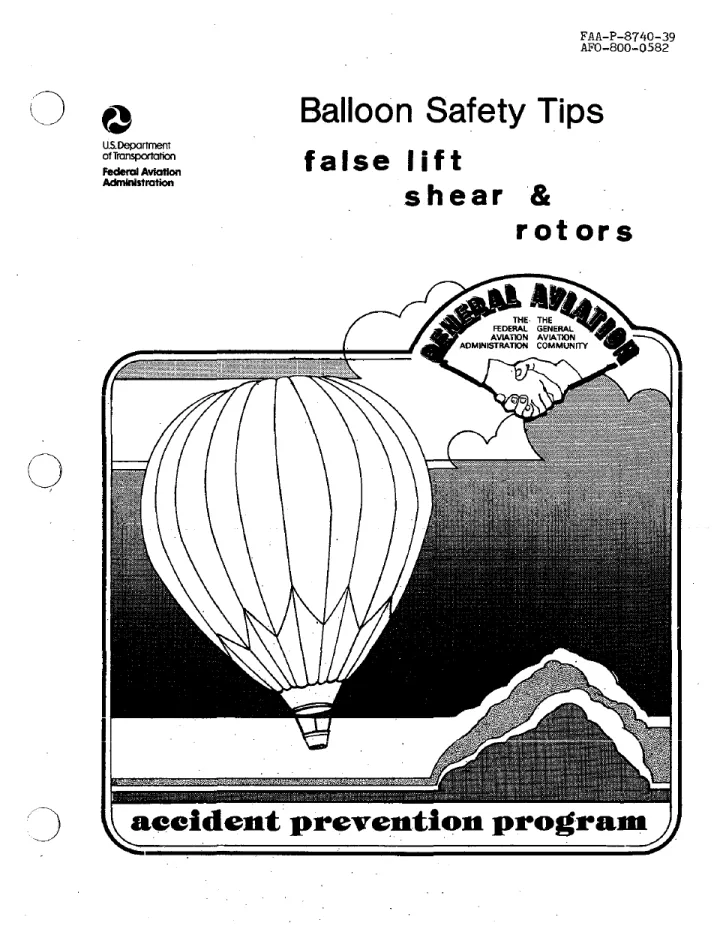
Balloon Safety Tips - False Lift, Shear, and Rotors
Balloon safety
Balloon Safety Tips - False Lift, Shear, and Rotors
FAA balloon-safety guidance for false lift, wind shear, rotors, and changing air currents.
- Publication number
- FAA-P-8740-39
- Publisher
- Federal Aviation Administration
- Access
- Free official publication
- Best for
- Balloon safety
Purpose and audience
About this handbook
A focused FAA safety publication explaining subtle wind effects that can produce unexpected balloon movement and control challenges.
Who should use it
Balloon pilots, students, instructors, and ground crew operating in changing wind conditions.
Key subjects
What you’ll learn
False lift indications
Wind shear recognition
Rotor and terrain effects
Conservative response planning
Practical study
How to use it in training
Use this short publication as a preflight discussion guide. Connect each hazard to local terrain, forecast winds, and specific launch or landing decision points.
- Set an objective. Choose the chapter or topic that supports the next lesson, task, or operating decision.
- Read actively. Mark definitions, diagrams, limitations, and questions to discuss with an instructor or qualified professional.
- Apply the material. Work a scenario, calculation, briefing, simulator exercise, or supervised practical task.
- Verify current information. Check regulations, official notices, charts, and approved aircraft or equipment documents.
Edition awareness
Revision and authority notes
This publication supplements, but does not replace, the current Balloon Flying Handbook, weather information, and qualified instruction.
Directory review date: August 1, 2026
Continue studying