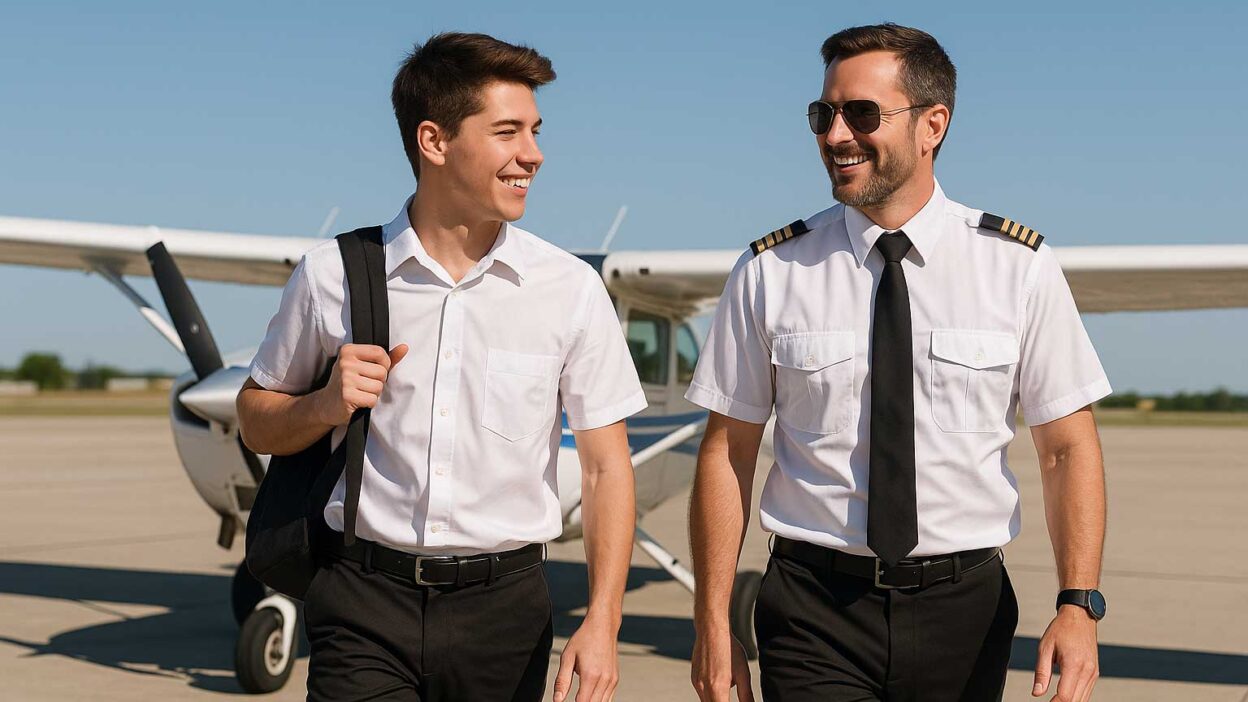
Wondering what a typical day looks like for a full-time student pilot? Flight training is exciting, structured, and sometimes a little nerve-wracking—but it’s always rewarding. Here’s a snapshot of what you might experience during a day in a full-time flight training program.
6:30 AM – Pre-Flight Prep
Many flight schools schedule early morning flights to take advantage of smooth air. Students typically start their day by checking the weather, reviewing their lesson plan, and completing preflight planning with their instructor.
7:15 AM – Preflight Inspection
At the hangar or ramp, students perform a thorough preflight inspection of the aircraft. This is where classroom knowledge meets real-world application—checking fuel, oil, control surfaces, and instruments.
8:00 AM – Takeoff Time
With everything checked and cleared, it’s time to fly. A typical flight lesson might include practicing maneuvers like slow flight, stalls, or landings. Students apply radio communication skills and use navigation techniques learned in ground school.
9:30 AM – Post-Flight Debrief
Back on the ground, the instructor and student review the flight. What went well? What could be improved? This feedback is key to progressing as a pilot.
10:00 AM – Ground School
After flying, it’s time for classroom instruction. Topics might include airspace, weather interpretation, regulations, or aircraft systems. Many full-time programs alternate ground lessons with flight time throughout the week.
12:00 PM – Lunch & Study Break
Students grab a bite to eat and review notes or watch FAA training videos. Study is a constant part of life in flight school—whether you’re preparing for the next lesson or the FAA written exam.
1:30 PM – Simulator Session
Some afternoons include simulator time to practice procedures, emergency scenarios, or navigation. Simulators help reinforce learning without the cost or weather constraints of real flying.
3:00 PM – Review & Homework
Before wrapping up the day, students check in with instructors, review their progress, and get assignments for the next lesson. Homework might include reading, practice quizzes, or flight planning exercises.
Final Thoughts
Flight school is fast-paced and immersive. It’s important to know that training experiences can vary depending on the type of school.
Part 141 flight schools usually follow a structured schedule with a fixed curriculum. Students often attend flight training like a full-time job, with set lesson blocks, syllabus tracking, and regular stage checks. This is a great fit for those who want to train quickly or qualify for certain benefits like GI Bill funding.
Part 61 flight schools typically allow you to move at your own pace. These schools offer more flexibility, which is ideal for students balancing work, school, or other commitments. While the training content is the same, the delivery and scheduling are more adaptable to individual needs.
It’s a blend of hands-on flying, classroom learning, and self-study. Each day builds your skills and brings you one step closer to becoming a licensed pilot.
CTA: Ready to start your aviation journey? Find a flight school near you on FlightSchoolList.com and take your first step into the cockpit.