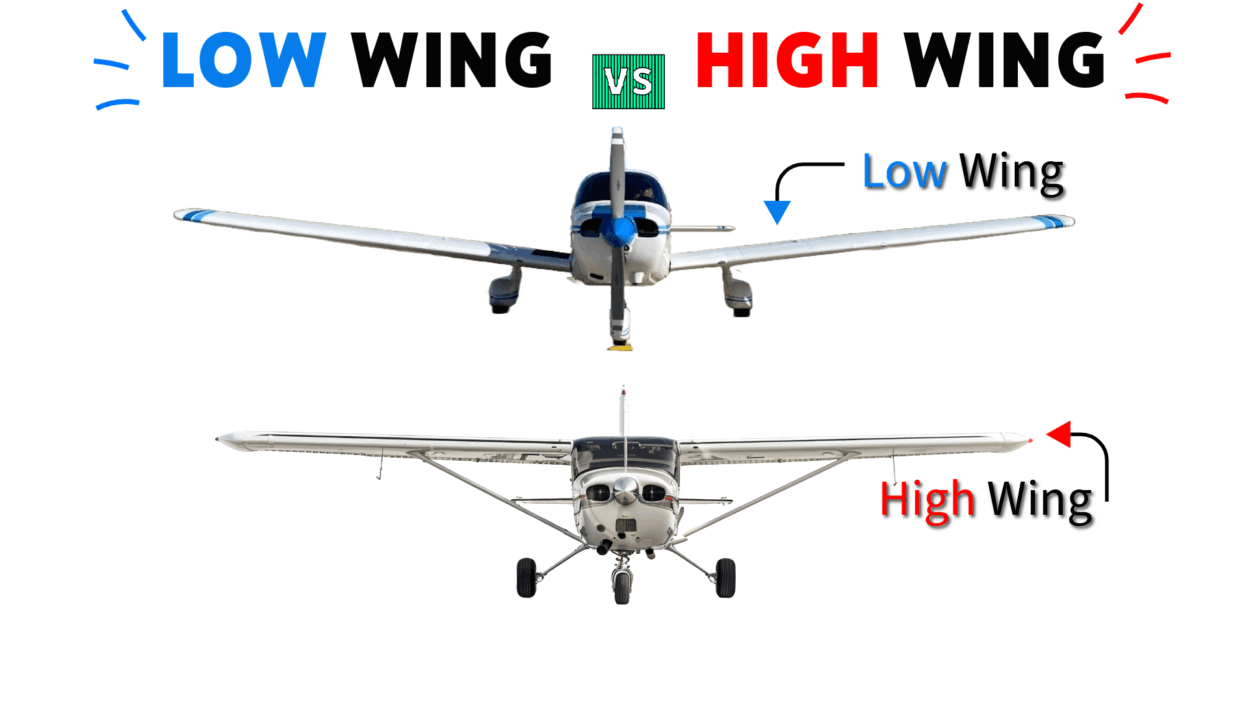
When you’re just starting your flight training, one of the first things you’ll notice is that training aircraft often fall into two categories: high-wing or low-wing. This refers to where the wings are mounted on the aircraft — either above (high-wing) or below (low-wing) the fuselage. But it’s more than just a visual difference. Each configuration affects how the aircraft flies, how you see out of it, and how you’ll interact with it on the ground.
Let’s break it down so you can better understand the pros and cons of each, and maybe even help you decide which type you prefer flying.
What Is a High-Wing Aircraft?
A high-wing airplane has its wings mounted on the top of the fuselage—think of the popular Cessna 172.
✅ Advantages:
- Excellent Ground Visibility: With the wings mounted above the cabin, high-wing aircraft offer an unobstructed view of the terrain below—perfect for navigation, aerial photography, or sightseeing flights.
- Inherent Flight Stability: The aircraft’s center of gravity hangs beneath the wings, creating a pendulum-like effect that improves lateral stability. This makes high-wing airplanes feel steadier in flight—especially helpful during early training.
- Easier Entry and Loading: With no wing in the way, boarding and loading gear is simpler—an advantage when operating on uneven or rough airstrips.
- Better Ground Clearance: Higher-mounted wings reduce the chance of striking obstacles like rocks or brush, making these aircraft well-suited for backcountry or unimproved fields.
- Simpler Fuel Delivery: Many high-wing aircraft use gravity-fed fuel systems, which allow fuel to flow directly to the engine without the need for pumps—resulting in a more straightforward and often more reliable system.
❌ Limitations:
- Poor Upward Visibility: The wing can block your view above the aircraft, which matters in turns and busy airspace.
- More Crosswind Susceptibility: High-wings have more surface area above the fuselage, making them more vulnerable to crosswinds during taxi, takeoff, and landing.
What Is a Low-Wing Aircraft?
Low-wing airplanes have their wings attached at the bottom of the fuselage, like a Piper Warrior or Diamond DA40.
✅ Advantages:
- Clearer Upward Visibility: With the wings mounted below the fuselage, pilots get a better view of the sky—ideal for spotting traffic above during climbs or turns.
- Aerodynamic Efficiency: Low-wing aircraft often feature sleeker designs with reduced drag, contributing to slightly better cruise performance and fuel economy in many models.
- Stronger Ground Effect: When close to the runway, low-wings trap air between the wing and the ground, boosting lift. This can make landings smoother—but it also requires good airspeed control to avoid excessive floating.
- Convenient Ground Access: With wings lower to the ground, preflight inspections, fueling, and maintenance tasks are easier and safer—no ladder required.
❌ Limitations:
- Restricted Downward Visibility: With the wings below the cockpit, it can be difficult to see directly beneath the aircraft. This limits situational awareness during ground reference maneuvers, aerial photography, or spotting landmarks.
- Pump-Driven Fuel System: Unlike gravity-fed systems in high-wings, low-wing aircraft typically require fuel pumps to move fuel from the tanks to the engine. This adds complexity and introduces additional components to monitor.
- Lower Wingtip Clearance: The lower position of the wings increases the risk of striking obstacles—such as taxi signs, cones, or even other aircraft—when operating on tight or crowded ramps.
Which Is Better for Learning to Fly?
There’s no definitive winner—both have their perks. What matters is understanding how each design affects flight behavior and visibility, so you’re prepared no matter which one you train in.
High-Wing Trainers:
- More docile and stable
- Great for confidence-building and basic maneuver training
Low-Wing Trainers:
- Typically more responsive
- Offer different aerodynamic experiences like stronger ground effect and faster roll rates
🛠 Quick Comparison Table
| Feature | High-Wing Aircraft | Low-Wing Aircraft |
|---|---|---|
| Stability | Naturally more stable | Relies on dihedral for stability |
| Visibility – Downward | Excellent | Limited |
| Visibility – Upward | Limited | Excellent |
| Ground Effect | Less pronounced | More pronounced |
| Fuel System | Gravity-fed | Pump-fed |
| Maintenance Access | Requires ladder | Ground-accessible |
| Wind Susceptibility | More affected | Less affected |
| Ideal For | Bush flying, sightseeing | Cross-country, aerobatics |
🚀 Final Thoughts for Student Pilots
As you begin your training, it’s a great idea to try both high-wing and low-wing aircraft early on. Each offers a unique flying experience, and getting a feel for both can help you decide which one feels more natural and enjoyable to you.
Personally, I’ve always preferred low-wing aircraft—I enjoy the way they handle and the clear view of the sky during turns. But every pilot is different, and your own preference might surprise you!
If you’re still looking for a flight school, check out our nationwide flight school directory at FlightSchoolList.com—your next lesson might be just a click away!